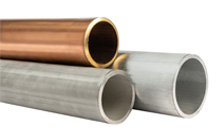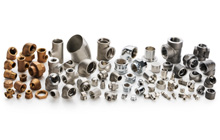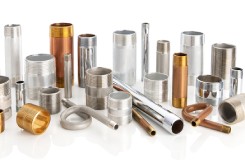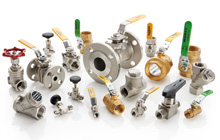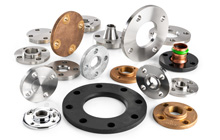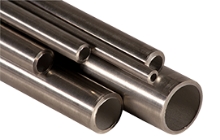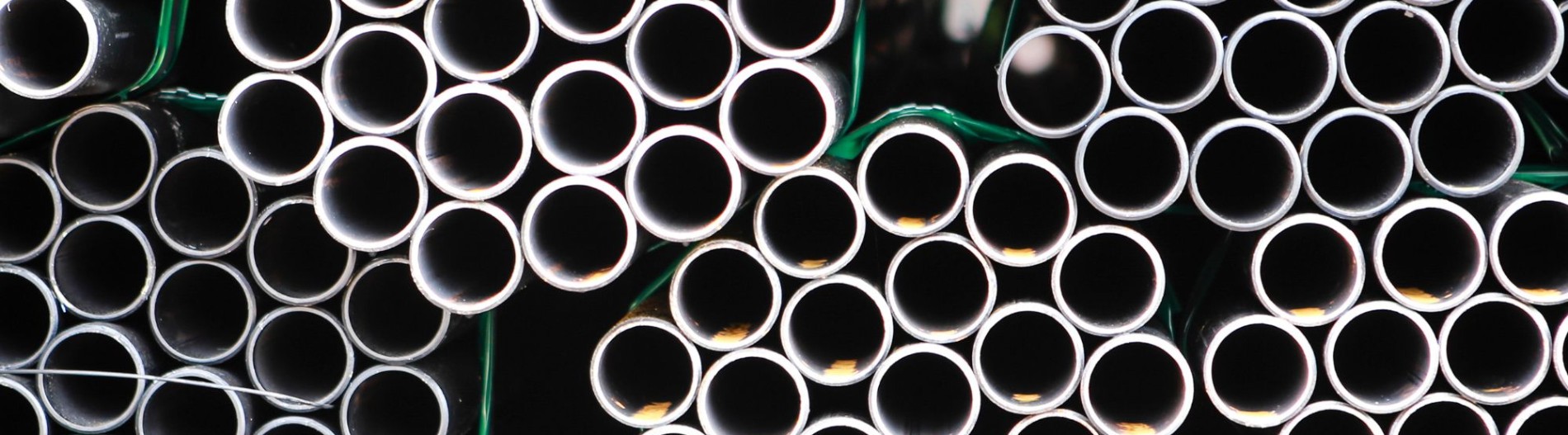
Carbon steel is a durable metal alloy made by adding carbon to iron. The purpose of this is to make carbon steel ,which has enhanced strength, hardness and durability, when compared to the base iron.
PVF wholesalers choose Merit Brass because our overall commitment to quality and our commitment to working with high-quality, innovative suppliers.
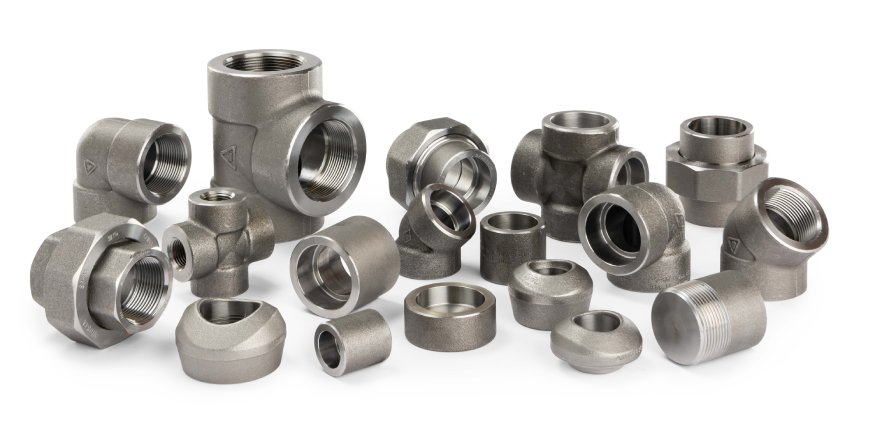
Merit’s offering includes: A105-N 2000# Threaded and 3000# Threaded & Socket Weld Carbon Steel Fittings & Outlets and ASTM A420 Carbon Press Fittings provide wholesalers with a diverse range of products that can be bundled with Merit’s complete offering.
In addition, Merit’s commitment to our wholesale customers provides them with technologies (EDI, VMI, MBWebXpress) to drive efficiencies in their day-to-day ordering, a team of experts ready to support their daily needs and same day shipments across 5 locations to ensure that their inventories sustain their customers’ needs.
.jpg "Carbon Steel Merit Products")
| Steel Type | Key Alloying Elements | Notable Properties | Traditional PVF Uses |
|---|---|---|---|
| Carbon Steel | Iron + Carbon (up to 2.1%) |
|
|
| Stainless Steel | Chromium (min. 10.5–11%) |
|
|
| Alloy Steel | Manganese, Nickel, Molybdenum |
|
|
| Tool Steel | Tungsten, Vanadium, Cobalt |
|
|
Carbon steel is used in industrial piping systems as it can withstand high pressure, and several environmental conditions which lengthens its life span; which, as a result, makes it a cost-effective solution.
Carbon steel is categorized based on the amount of carbon added to the base iron material. These classifications directly influence strength, ductility, weldability, and typical use across industrial and piping applications. There are four different types of carbon steel:
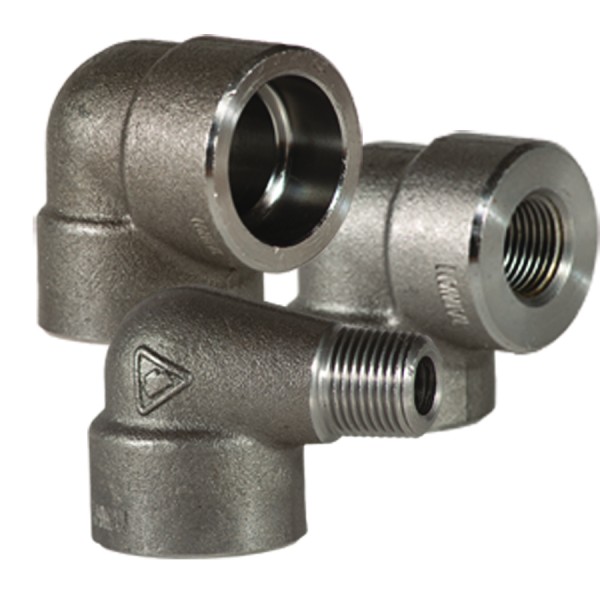
Low carbon steel is also called mild steel. Mild steel has a low amount of carbon typically about 0.05% to 0.25%. Mild steel also has high tensile strength and due to the low carbon in the steel, it makes it more ductile and easier to shape, form and weld.
The general uses for mild steel are beams, columns and machinery parts due to the strength it has. Mild steel pipes are used in piping systems due to the strength as well as the corrosion resistance.
Medium carbon steel has a carbon amount around 0.30% to 0.60%. Medium carbon steel has a good balance between strength and ductility, where you are still able to weld and form the steel.
Some of uses of medium carbon steel are railway tracks, train wheels, couplings, forgings, crankshafts for engines, machinery parts, automotive panels, springs, cables, and gears.
High carbon steel has a carbon amount around 0.60% to 1.5%. With the higher carbon amount, the strength, hardness, and wear resistance increases. Conversely, the higher carbon amount does make the steel more brittle and less ductile.
The general uses of high carbon steel are mechanical components, springs, and industrial cutting tools.
Ultra-high carbon steel has a carbon amount of 1.25% to 2.0%. Ultra-high has extreme strength, hardness, and resilience. It is similar to the high carbon steel where it is very brittle and less ductile due to the high carbon content.
The general uses for ultra-high are wear-resistant piping, high stress machine parts, cutting components, and structural elements.
| Type of Carbon Steel | Grades of Carbon Steel |
|---|---|
| Low Carbon (Mild Steel) |
|
| Medium Carbon |
|
| High Carbon |
|
| Ultra High Carbon |
|
Carbon steel has a high mechanical strength, and its stress resistance supports structural stability in load-bearing applications. The versatility of carbon steel being able to form, cut, and use in welding processes allows for flexibility in different applications. The workability of carbon steel depends on the carbon amount in the steel.
The more carbon in the steel, the more the hardness increases, but at the expense of ductility. The higher carbon amount also allows the steel to resist wear and impact.
Low carbon steel provides great weldability for structural applications. However, the high carbon steel (due to the higher amounts of carbon in the steel) reduces the weld quality and will increase the chances of cracking.
The temperature range for carbon steel is from -29˚C to 425 ˚C. Once the temperature drops below -29˚C, the toughness drops rapidly and the risk of brittle fracture increases. If the temperature exceeds 425 ˚C, it could lead to accelerated oxidation and strength loss.
Carbon steel does not have great corrosion resistance because it lacks a protective layer unlike stainless steel. It makes it more susceptible to rust and corrosion when the steel is exposed to moisture and oxygen. Due to this, measures should be taken to coat, or treat, the carbon steel to increase the service life.
Carbon steel is produced by smelting iron ore in a blast furnace to create molten pig iron, which is then refined in an oxygen furnace to remove excess carbon in order to achieve correct percentage for the grade of carbon steel required. Once the correct carbon percentage is achieved, additional alloying elements, such as manganese or silicon, are added to complete the chemical composition.
The carbon steel is then formed into shape (billets, bars, sheets, coils, etc.) for use by a manufacturer.
Forging is a manufacturing process that involves heating the steel until it becomes malleable and shaping it through compressive force to enhance strength, durability, and overall structure.
Hot working is performed above the steel’s recrystallization temperature to refine the grain structure and improve ductility, while normalizing requires heating the steel above its critical temperature to form uniform austenite before cooling it in still air.
Turning a raw piece of carbon steel into a fitting will introduce stresses into the metal during the various forming and machining processes. Therefore, carbon steel fittings are subjected to heat-treatment methods to achieve the desired mechanical properties. Heat-treatment methods may include:
Carbon steel is mainly used in construction, infrastructure, and oil & gas, but the properties of carbon steel make it suitable for a wide range of applications. Which is why you see carbon steel commonly used in the PVF industry
The affordability and adaptability of carbon steel support the success of wholesale distributors with a steady demand for this product.
The most commons applications are:
When choosing between carbon steel and stainless steel, you must look at the following factors:
In terms of operational environment, carbon steel is the preferred solution for projects that are in environments which are not prone to corrosion; however, when the environment has the risk of corrosion, stainless steel is preferred. If the application requires heavy-duty operations, carbon steel is sufficient as it also boasts a superior hardness and tensile strength, making it more ideal for applications like heavy machinery and structural components. When the application comes in contact with corrosive substances, or requires sterile conditions, the properties of stainless steel are going to provide a better solution.
Stainless steel does have a superior resistance to corrosion which can lead to a better lifespan; however, stainless steel is at a higher price point. Carbon steel is often more budget-friendly, making it great option for projects with tight budgets.
| Carbon Steel versus Stainless Steel | Carbon Steel | Stainless Steel |
|---|---|---|
| Chemical Composition | Carbon is added to the base iron material. | Chromium and nickel are added to the base iron material. |
| Cost | Carbon steel is less expensive because of the raw materials costs. | Stainless steel is more expensive because of the material cost. |
| Mechanical Properties | Carbon steel has higher strength and hardness that is better suited for high pressure and high temperature applications. | Stainless steel is more ductile and corrosion-resistant than carbon steel. It allows for mechanical deformation, like bending and twisting. |
| Temperature resistance | Carbon steel has different grades to fulfill any temperature need. | Stainless steel maintains structural integrity over a broader temperature range. |
| Piping System Applications | Oil & gas, water treatment (raw sewage), steam systems, closed heating/cooling systems | Chemical, Oil & gas, Food processing, Pharmaceutical, Water Treatment (potable water) |
ASTM A105 and ASTM A105N govern the chemical composition of forged carbon steel piping components. Their chemical composition is 0.35% carbon content, 1.05% manganese and small amount of silicon, phosphorus, and sulfur.
The ‘N’ for A105N stands for normalization which means that the forged steel has refined grain structure for improved physical properties.
The temperature range is -29˚C to 425 ˚C , while the pressure rating accommodates pressure classes from 150 to 2500.
ASTM A106 is a pipe specification that is formulated for high-temperature and high-pressure service. Since high-temperature, high-pressure situations will put more stress on the pipe, these types of pipes reduce the risk of failure.
ASTM A420 is a type of steel suited for low-temperature services. There are different grades of A420, WPL6. WPL9, WPL3, and WPL8 , each grade has a different temperature for their impact test, as well as having slightly different chemical compositions.
ASTM A234 is a standard specification of carbon fittings for moderate and high temperature services. These types of pipe fittings are used in pressure pipelines and pressure vessel fabrication.
Carbon steel is a staple and critical for specific applications, like oil & gas, because of the strength, durability, and its ability to handle high-pressure situations.
Wholesalers benefit from inventorying carbon steel fittings because they can serve a wide range of applications. In addition, given the project nature of the applications for carbon steel fittings, wholesalers can win more business when product is available, ships quickly and is cost competitive.
Contractors are looking for carbon products that are easy to install and are of high quality to avoid installation issues.
Engineers focus more on specifications, requiring certified ASTM carbon steel fittings because they meet the requirements for pressure, temperature, and corrosion resistance.
There are several key factors that engineers consider prior to selecting them for installation. These factors include:
To ensure project success, optimize system performance and product durability, it is important to understand the difference between carbon steel and alloy steel:
| Carbon Steel Versus Alloy Steel | Carbon Steel | Alloy Steel |
|---|---|---|
| Chemical Composition | Carbon is added to the base iron material. | Alloy steel begins with iron, and some carbon. Depending on the required Alloy, other chemicals (sulfur, manganese, nickel, chromium, zinc, etc.) are added. |
| Piping System Applications | Oil & gas, water, steam systems, closed heating/cooling systems | Power generation, oil & gas refining, petrochemical processing, chemical processing |
| Cost | Carbon steel is cheaper and more cost-effective because of the cost of raw materials. | The material cost and the processing cost are higher for alloy steel. |
Understanding the differences between carbon steel and high temperature alloys will help you understand safety, cost, performance, temperature thresholds, corrosion rates and structural loads. This analysis will help you identify what alloy will perform best in your application.
| Carbon Steel Versus High Temperature Alloys | Carbon Steel | High Temperature Alloys |
|---|---|---|
| Temperature Resistance | If the temperature exceeds a specific amount, carbon steel can lose strength and shape | These alloys are engineered to retain their strength and shape even under extreme heat. |
| Cost | High strength at a low cost | Its alloying elements (Nickel, Chromium) makes it more expensive |
| Chemical Composition | Carbon is added to the base iron material. | Traditionally, Nickel, Cobalt, Iron, Chromium, Aluminum, Titanium and other refractory metals are added to the base iron. |
| Piping System Applications | Oil & gas, water, steam systems, closed heating/cooling systems | Power generation, petrochemical processing, aerospace |
To ensure highquality carbon steel, multiple thirdparty tests are performed.
The minimum design metal temperature (MDMT) dictates the required impacttest temperature, which is typically conducted between –29°C and –46°C to confirm the steel maintains adequate ductility at low temperatures.
Carbon steel undergoes technical requirements & specifications as well as test methods developed by the ASTM committee. The ASTM provides assurances that the product’s performance (strength, durability & safety) and quality (manufacturing processes are consistent with the standard) meet their strict guidelines.
The ASME compliance for carbon steel focuses on material selection, structural integrity calculations & welding procedures. It also audits the manufacturers’ quality program similar to ASTM. Lastly, compliance is awarded when thorough documentation and non-destructive testing (NDT) are performed.
Our Quality CommitmentMerit Brass offers a comprehensive range of carbon steel fittings designed to meet the pressure, temperature, and installation requirements of industrial and piping applications. Our carbon product portfolio includes both traditional forged fittings and innovative press solutions to support a wide range of project needs.
Forged carbon steel fittings normalized for enhanced hardness, strength and machinability.
Browse A105N forged fittings by pressure class to match your system’s pressure rating (2000#, 3000#, 6000#).
Carbon Steel outlets forged branch connection fittings used to create a branch for carbon piping systems.
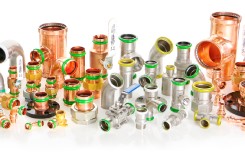
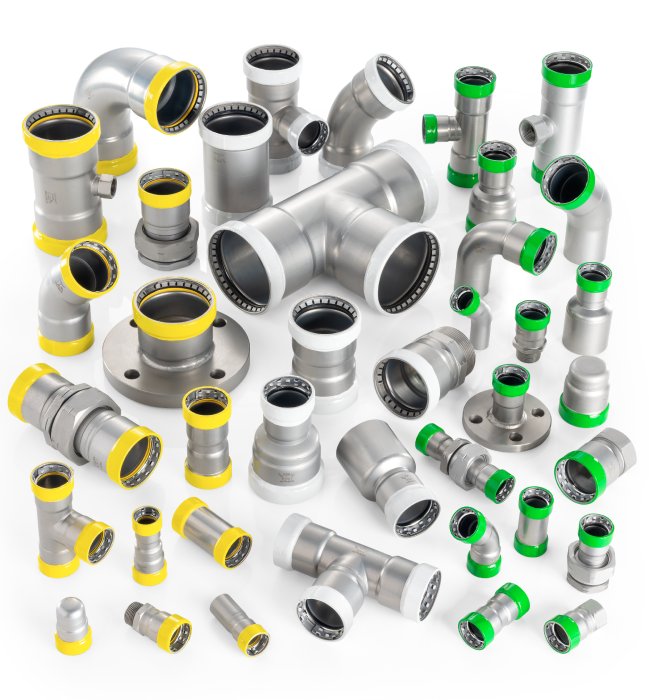
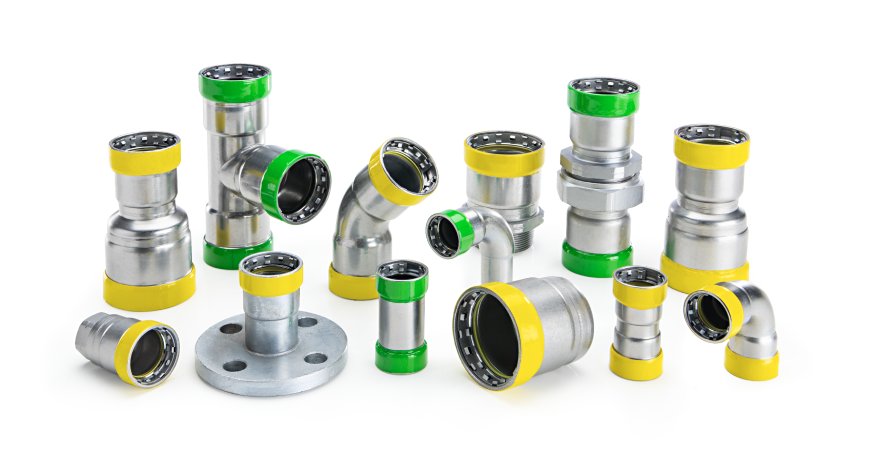
An innovative carbon press system equipped with a Visual Indicator Press Ring designed to help reduce installation time, eliminate hot work, and maintain system reliability.
View MeritPress™ Carbon FittingsCarbon steel press fittings with EPDM sealing elements, suitable for fluids and water and some gas services.
View EPDM Carbon Press FittingsCarbon steel press fittings featuring HNBR sealing elements for higher‑temperature and more demanding service conditions, suitable for a wide range of gases and oil & lubricant services.
View HNBR Carbon Press FittingsCarbon steel press fittings with FKM seals designed for higher‑temperature and demanding system applications.
View FKM Carbon Press Fittings*See FKM Carbon Press Fittings (page 20).
Yes, carbon steel is an alloy. The material is made from iron and carbon with other elements present but not intentionally added as alloying elements. The carbon content is higher than base iron, which increases strength, hardness, and durability.
The main difference between carbon steel and alloy steel is the chemical composition. Carbon steel is primarily composed of iron and carbon with small amounts of other elements, while alloy steel contains intentionally added elements such as manganese, nickel, chromium, vanadium, and molybdenum to enhance specific properties.
Yes, carbon steel rusts easily when exposed to moisture and oxygen. Factors that accelerate corrosion include continuous oxygen exposure, salt or chemical environments, and surface damage such as scratches, which can make carbon steel more vulnerable to oxidation.
Carbon steel and stainless steel can be differentiated through several visual and physical indicators. Carbon steel is typically magnetic, rusts more readily, and often appears as a dull gray or darker material, while stainless steel is generally non‑magnetic, corrosion‑resistant, and has a brighter finish.
No, 4140 is not classified as carbon steel. It is considered a low alloy steel due to the intentional addition of chromium and molybdenum, which improve strength, toughness, and hardenability compared to standard carbon steels.
FAQ
LEARN MORE